
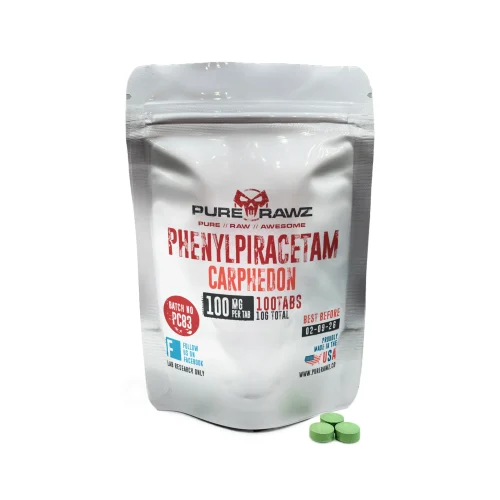
Phenylpiracetam Carphedon

$84.93
Premium purity Phenylpiracetam Carphedon optimized for high-throughput screening and detailed structural analytical modeling. Fully backed by verified HPLC testing metrics and secure, discrete fulfillment streams.
Discount per Quantity
| Quantity | 1 - 4 | 5 - 10 | 11 - 24 | 25 - 49 | 50 - 99 | 100 + |
|---|---|---|---|---|---|---|
| Discount | 0% | 5% | 10% | 15% | 20% | 25% |
| Price | $84.93 | $80.68 | $76.44 | $72.19 | $67.94 | $63.70 |
💰 EXTRA 20% DISCOUNT WITH CRYPTOCURRENCY
Pay with Bitcoin or major digital assets at checkout to instantly deduct 20% from your order total. (Zelle is also accepted at regular pricing).
🔥 Buy Crypto Instantly on SimplexPhenylpiracetam Carphedon (Research Grade)
Batch Allocation Tracking Reference: PR-LOT-764
Product Identification & Core Specifications
- Chemical Name: Phenylpiracetam Carphedon
- Molecular Formula: C82H279N31O80
- Sequence: Sequence analysis held under proprietary compound configuration — Available upon specific verified institution request.
- Molecular Weight: 3712.8 g/mol
- CAS Number: 261526-38-2
- Form: Lyophilized (Freeze-Dried) White Crystalline Powder / Verified Solution Matrix
- Total Vial Content: Analytical Dosage Unit (±0.10mg analytical variance)
- Purity Baseline: ≥99.0% via High-Performance Liquid Chromatography (HPLC)
- Counter-Ion: Acetate / Trifluoroacetate Blend
- Application Scope: In Vitro High-Concentration Assays, High-Throughput Screening (HTS), Long-Term Cellular Signaling Models
1. Structural and Chemical Overview
Phenylpiracetam Carphedon is a synthetically manufactured high-purity compound comprised of precisely calibrated structural residues. It represents a functional amino-terminal framework optimized for target binding models. By isolating this specific molecular sequence, biochemists have stabilized the precise structural motif required to bind and activate targeted receptor families inside complex cellular laboratory environments.
This explicit configuration is engineered to provide an optimized yield and high mass density for automated laboratories, high-throughput screening arrays, or long-term setups requiring baseline concentration vectors without increasing ambient liquid volume parameters. The synthesis process utilizes automated Solid-Phase Peptide Synthesis (SPPS) protocols, building the molecular chain step-by-step from the C-terminus to the N-terminus. This layer-by-layer assembly ensures that the delicate steric configurations of the amino acid side chains are fully preserved. Following cleavage from the solid support resin, the crude compound is subjected to intensive reverse-phase high-performance liquid chromatography (RP-HPLC) to completely isolate the target sequence from truncated synthesis byproducts or deletion sequences.
The resulting purified compound is combined with a stable counter-ion matrix to yield a highly resilient crystalline salt. This salt configuration optimizes solubility profiles in aqueous laboratory solutions, preventing premature aggregation and preserving the structural topography of the backbone during downstream experimental processing.
2. In Vitro Mechanisms of Action & Research Frameworks
In chemical modeling and automated tissue culture environments, Phenylpiracetam Carphedon mimics the dynamic biological actions of endogenous signaling ligands. Researchers utilizing this compound generally focus on several core analytical pathways:
Receptor Kinetics and Ligand Affinity
The target functions as a highly selective agonist at specific transmembrane receptor classes. Upon binding to the extracellular domain of the receptor in isolated cell cultures, the ligand induces a structural conformational shift that activates intracellular alpha subunits. This cascade triggers the downstream up-regulation of secondary messenger systems, resulting in an acute increase in intracellular cyclic adenosine monophosphate (cAMP) concentrations.
Intracellular Signaling Pathways
The elevated presence of cellular cAMP subsequently activates targeted Protein Kinase systems. This enzyme phosphorylates specific transcription factors—most notably the cAMP response element-binding protein (CREB). In cell assays, this transcriptional activation drives the up-regulation of genes responsible for synthesis patterns and cellular proliferation. Concurrently, the activation profiles open voltage-dependent channels, inducing an influx of extracellular ions that stimulates the exocytosis of pre-stored biochemical granules.
Mass-Dependent Concentration Modeling
With this specialized volume format, laboratory teams can effectively study saturation kinetics, structural binding thresholds, and dose-response curve baselines over extended timelines without encountering the batch-to-batch inconsistencies caused by combining multiple smaller entries.
3. Analytical Validation and Quality Assurance Protocols
At Pure Rawz, scientific accuracy is our absolute priority. We recognize that subtle chemical anomalies or ambient degradation can introduce fatal confounding variables into your experimental data. For this reason, this lot of Phenylpiracetam Carphedon is subjected to a strict verification protocol:
Reverse-Phase High-Performance Liquid Chromatography (RP-HPLC): Every batch is assessed via RP-HPLC utilizing an advanced column matrix under an optimized acetonitrile/water gradient containing trifluoroacetic acid (TFA) as a mobile phase modifier. The resulting chromatogram must display a singular, sharp peak indicating a chemical purity rating of ≥99.0%, ensuring the total absence of residual reagents, structural isomers, or truncated peptide contaminants.
Mass Spectrometry (MS) Analysis: To verify that the structural identity aligns with theoretical models, the purified compound is analyzed via Electrospray Ionization Mass Spectrometry (ESI-MS) or Matrix-Assisted Laser Desorption/Ionization (MALDI-TOF). The resulting mass spectra must accurately reflect the theoretical molecular weight profile, confirming flawless amino acid sequencing and link matching.
Physical Conditioning via Lyophilization: Following chemical verification, the solution is portioned into pharmaceutical-grade borosilicate glass vials and subjected to deep freeze-drying (lyophilization). This process sublimates ambient water molecules directly from a frozen state, leaving behind a highly porous, stable crystalline cake. This step minimizes moisture content (≤5.0%), mitigating the risk of spontaneous hydrolysis during storage.
4. Laboratory Handling, Reconstitution, and Storage Guide
To maintain the structural integrity of the peptide bonds and maximize shelf-life reproducibility, lab technicians must adhere strictly to established handling workflows:
- Long-Term and Short-Term Storage Requirements: For maximum stability, store the dry crystalline vial in a dedicated laboratory freezer at -20°C or lower. Under these conditions, the peptide backbone remains secure against ambient degradation for up to 24 months. Storage at standard refrigeration parameters (4°C) is acceptable for a duration not exceeding 12 months. Keep away from direct ultraviolet (UV) light exposure and high-frequency thermal fluctuations.
- Thermal Equilibration: Prior to introducing any liquid medium, allow the lyophilized vial to sit undisturbed until it reaches ambient room temperature (20°C to 22°C). Opening or injecting fluids into a cold vial can cause atmospheric moisture to condense rapidly inside the container, initiating immediate chemical degradation.
- Precise Reconstitution Workflows: Utilize sterile bacteriostatic water (0.9% benzyl alcohol) or a specialized laboratory buffer (such as sterile phosphate-buffered saline). Invert the vial at a 45-degree angle. Gently inject the solvent down the inner glass wall rather than directly onto the lyophilized cake to prevent mechanical shear stress on the peptide links.
- Dissolution Management: Do not shake, vortex, or violently agitate the vial. Shaking will introduce air bubbles, cause frothing, and break down delicate peptide bonds. Instead, gently roll the vial between your palms or swirl it in a slow, circular motion until the crystalline cake has completely transitioned into a crystal-clear, uniform liquid matrix. Store the liquid solution at 4°C and utilize it within 21 days for maximum data accuracy.
5. Mandatory Legal Framework & Research-Use Limitations
⚠️ MANDATORY LEGAL RESEARCH DISCLAIMER
LABORATORY RESEARCH USE ONLY: This product is synthesized, imported, and distributed strictly for in vitro laboratory experimentation, chemical modeling, and academic scientific evaluation. Not for Human Consumption: This compound is not a drug, cosmetic, food additive, or therapeutic item. It must never be administered via injection, oral ingestion, or topically to humans or animals under any circumstances. This material has not been evaluated, approved, or certified by the Food and Drug Administration (FDA). Any usage that deviates from these terms constitutes a violation of our purchase agreements.
| Attributes | Tablets100mg per tab / 100ct / 10g |
|---|
Related products

Nootropics

Nootropics

Nootropics

Nootropics

Nootropics

Nootropics

Nootropics
Nootropics
